Eduarqui's Pictures:

Click here to hear the music if you are using Netscape
Page 2 - My beloved Rio De Janeiro:
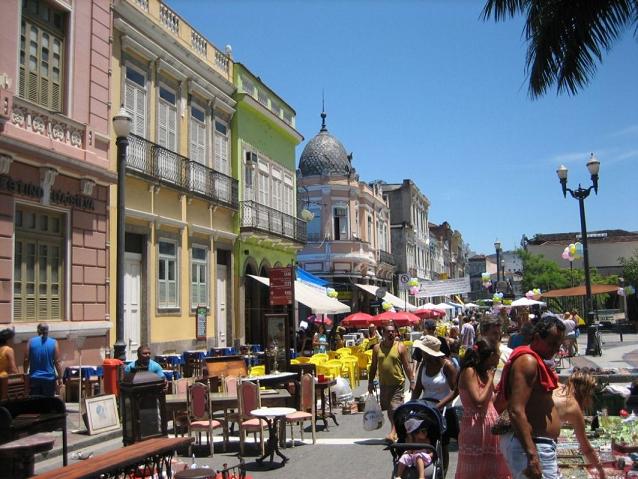
This is a street in our downtown, not from that skyscrapered section [CBD], but from our old section where you still find many nice low buildings and traditional shopping. This is Rua do Lavradio: Rua means Street, and Lavradio is the act of preparing land for tillage or agriculture - can you believe this was farming land around 1750? Yes, it was, but around 1850 it was included in urban tissue of Rio de Janeiro, becoming a fashionable neighborhood of "parisian apartments" [although with our typical brazilian style, please note colors, windows and iron verandas], but during XXth Century it went into relative decay. After 1980 it has been renovated with a good help from our municipal administration: owners of old shops and buildings are free of taxes if they keep in good conditions [and without changings] their properties, so a renaissance of activities is under way. As you can see bellow, this saturday view shows what Rua do Lavradio is now, a place with many shops devoted to antiquies and old furniture [some are expensive, but others have interesting prices]. Here you can buy memorabilia from old radio days, or old clothes, even a Ford Model T eventually [I saw one a few months ago here, it was amazing!]. Each Saturday the street is occupied by goods from shops and people can buy on the street. On common days these goods are inside shops, but street itself is only for pedestrians, so you can walk safely [no cars!].
More pictures of PARQUE ESTADUAL DOS TRÊS PICOS (Three Peaks State Park):
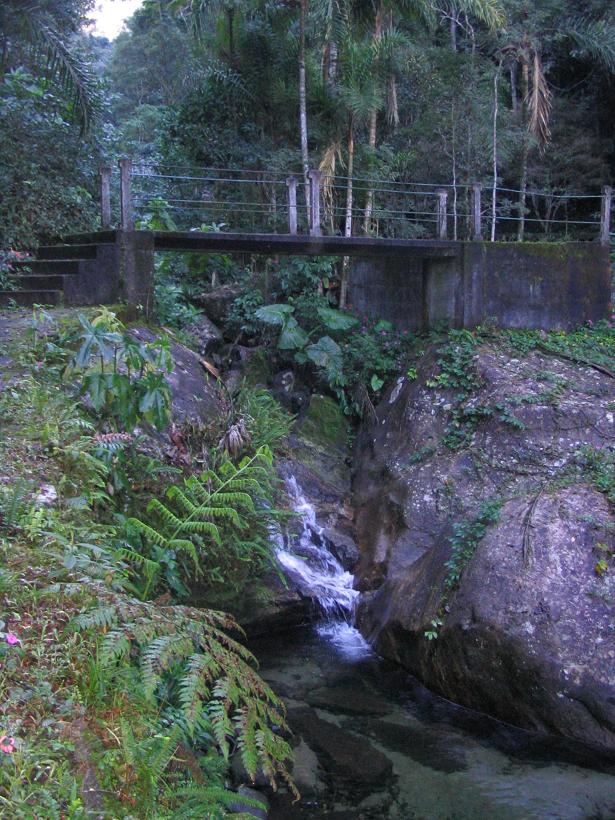
PETP001: I promised in 2006 to show buildings from old railway days or from more recent activities that are now surrounded by Brazilian rain forest. Here you see a XXth Century bridge for pedestrians to reach an old water barrage, next message will show better this bridge, but here you can imagine how hard is to find a good angle to show anything in the woods. I liked this view due to this little river with fallings and lovely plants and flowers so close to the bridge itself.
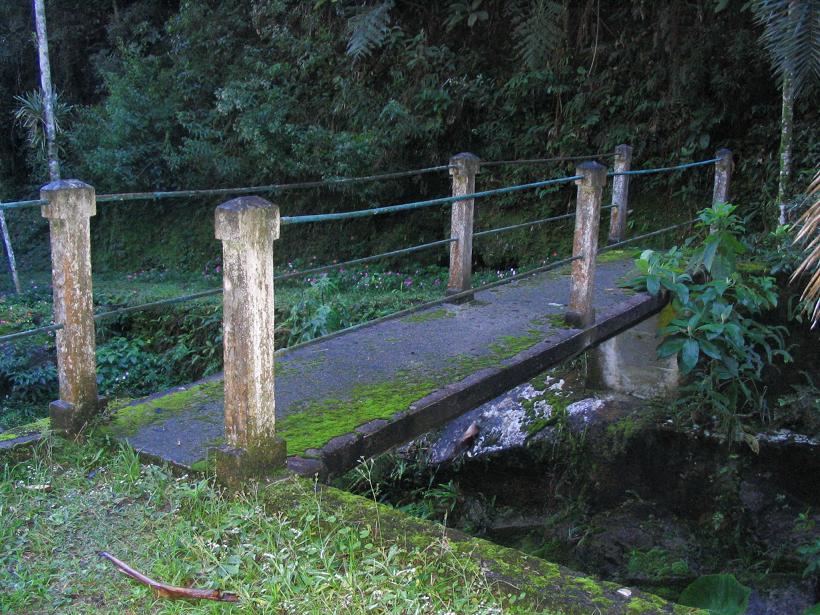
PETP002: Here is same bridge from message PETP01, but viewed from other angle. You can see flowers bellow and close to the falling water, while Nature is slowly taking for itself parts of the bridge [a good thing in my opinion, although making maintenance much more difficult].
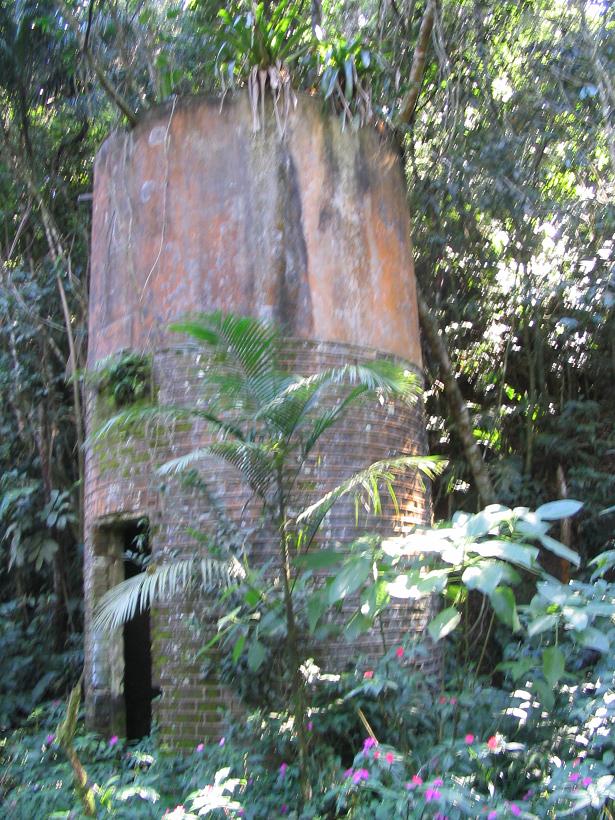
PETP003 I'm including three images from old structures of a railway that linked Rio de Janeiro to Nova Friburgo [nearly 90 miles] till late 1950s, when it was closed. Nova Friburgo is a town with almost 200,000 inhabitants in the mountains that make that famous background for our Guanabara Bay and is now a touristic center, but around 1820 it was a rural set for a farm colony occupied by swiss immigrants, trying to introduce coffee plantations on that lovely valley. But coffee couldn't resist to cold nights in the mountains, so other farming was introduced, and in XXth Century the production of milk and cheese boomed - there are rural hotels now where you can wake up in the morning and see the cows and the buildings where cheese is produced [they're named "queijarias" - "queijo" is cheese in portuguese], it's very interesting. The railway doesn't exist anymore, but many structures still resist because they were very well done. For example, see bellow this water tower, with two floors height [the door at first floor appears at bottom left], built in 1909, entirely with stone and a cylindrical shape. It appears on a jungle walkway because trees occupied again the soil where once a time the rails were and looks like a medieval tower. We're trying to make a "touristic trail" using structures like this as an atractive way to know both Nature and History.
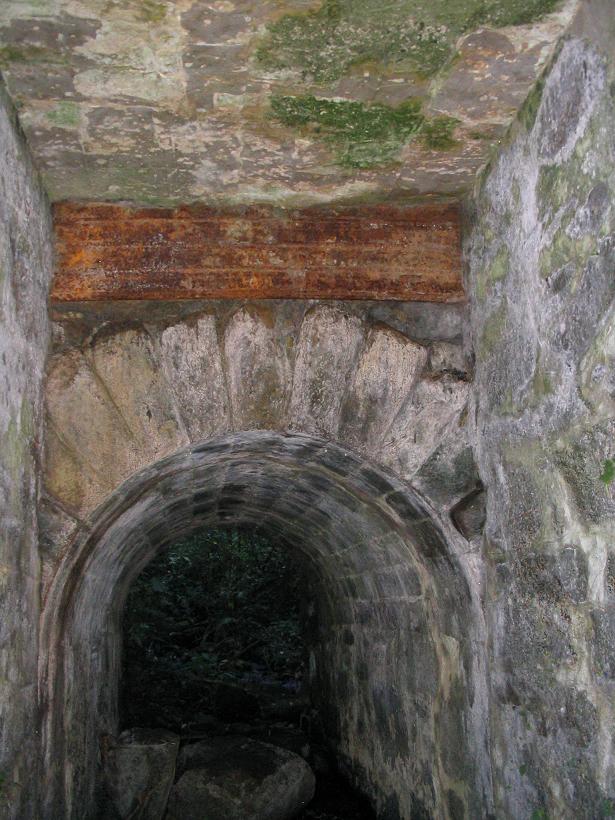
PETP004 Here is second image from an old structure of that closed railway: it looks like a tunnel, but believe me, this is a bridge ! There is a little river under this beautiful arch, and the train could pass over it on top of this huge stone structure. Please see next picture, where you will see how the stones used for this bridge appear alongside of a trail for a modern Indiana Jones, LOL ! About this present picture: it's not night, but shadows of brazilian rain forest give this impression, can you see ?
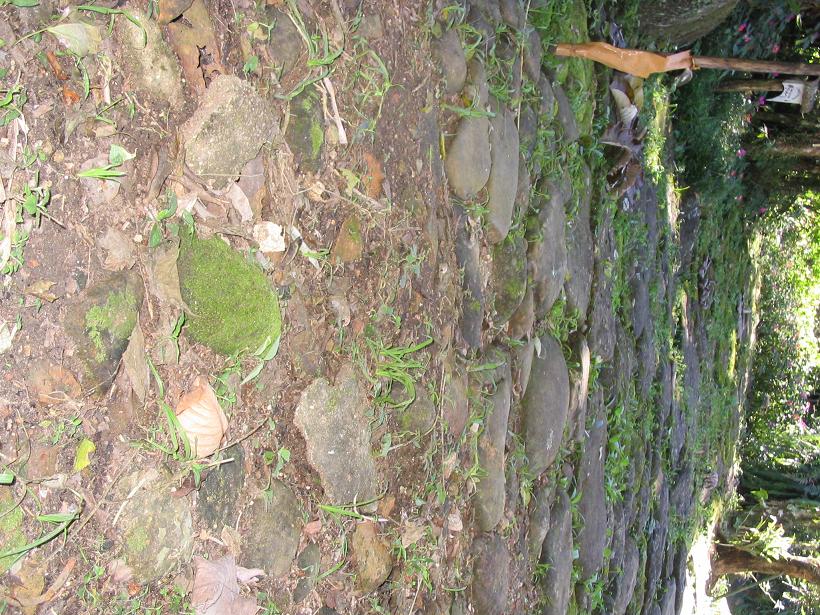
PETP005 Third and last image of an old railway structure: a wall at one side of the rail track, now a pedestrian walkway. Note huge stones used - it would be a charming experience for touristic trails, I guess, what do you think: "see the chinese wall of Brazil"! There are many structures like this, but plants and roots from trees are recovering some parts, so you feel a mysterious air when walking there. I told you before there are chances to look like Indiana Jones, or like those explorers from brand new version of King Kong, but no worries! There are not giant beings here!
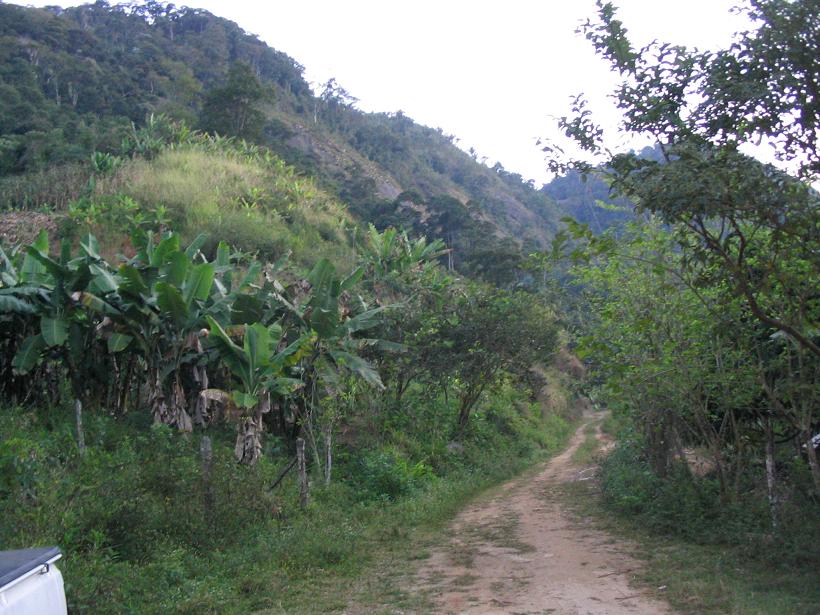
PETP006: Now with a picture from one Banana Tree Farm in the ouskirts of Three Peaks State Park: please note that in Brazil it isn't usual to plant thousands and thousands of banana trees side by side, as it would be done with orange or lemon trees. Here people plant a limited lot of banana trees among other trees from original forest: see these trees at right of the picture, while banana trees are at left, separated by an internal gravel road from this farming area - oh, yes, that white thing at bottom left of the picture is the truck from the firm I use to go to all places inside PETP. Making this, they create an interesting landscape of semi-cultivated farming and old wooded areas. At left background of the picture you see the famous brazilian rain forest on top of a small hill, preserving it from erosion: I always felt confidence about our people and the good sense they use on their lives, which can be observed in this picture.
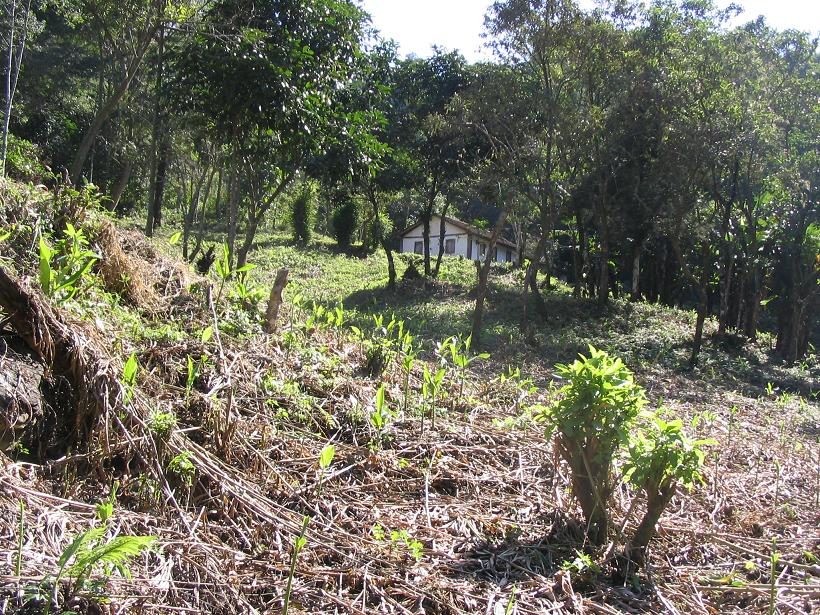
PETP007: This is a small farm in the outskirts of PETP : the house is in the background, surrounded by cultivated fruit trees, while in foreground we can see a recently open field for new plantations. But, as common in this area, this farm is of modest size and its plantations aren't in big scale [eventually, its owner is a person from Rio de Janeiro, trying to feel a taste of rural life on small scale]. Fortunely it was a sunny day, so you can see the colors and masses without shadows there.
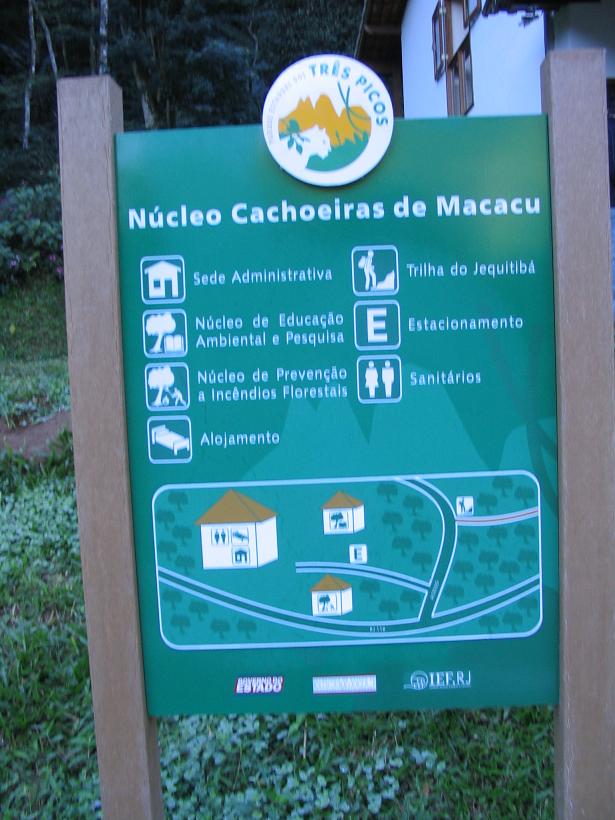
PETP008 We have specific artificial features made in areas inside the parque. Here bellow you see one that is specific for touristic use : a billboard with symbols and informations for visitors - note the trademark of Three Peaks State Park in a circle on top of the billboard. I guess this could be used to include what Mimita was questioning for those railway structures, but till present time there is nothing decided about them, and all those old structures remain almost ignored by visitors till now.
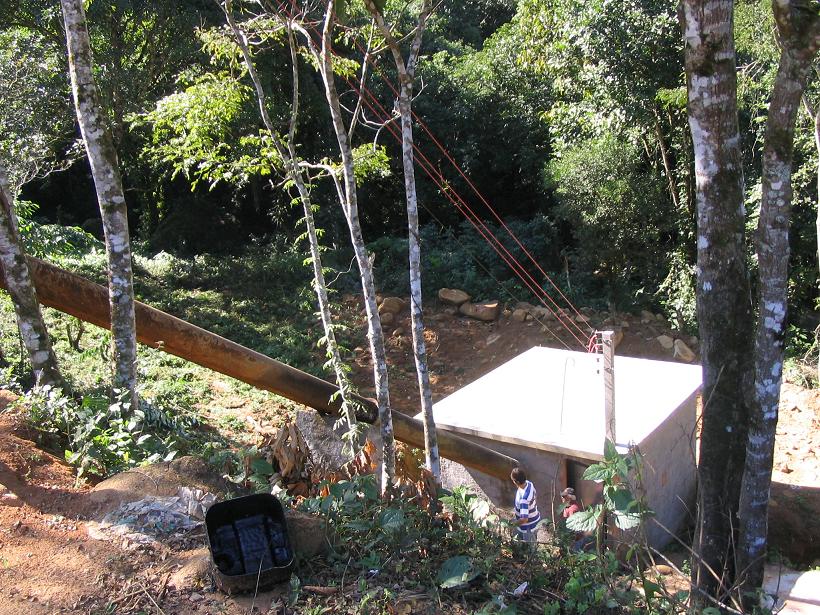
PETP009 This message, like PETP10, is to show how persons have been using water resources from the parque last years. Bellow you can see, on a sunny day, how a structure for pumps [note electrical wire to give power for these pumps] recently built appears from a point on the walkway inside the forest. It's clearly visible the river with stones from where many people pump refreshing water for residential and agricultural uses. A pipeline [metalic brown] appears clearly on foreground. This pumping station is in a farm partly inside the PETP, and I guess its owner is one of many potential allies for forest conservation in this area because all of them know that without forest there will not have water in next future - this explains why we see the forest nearby.
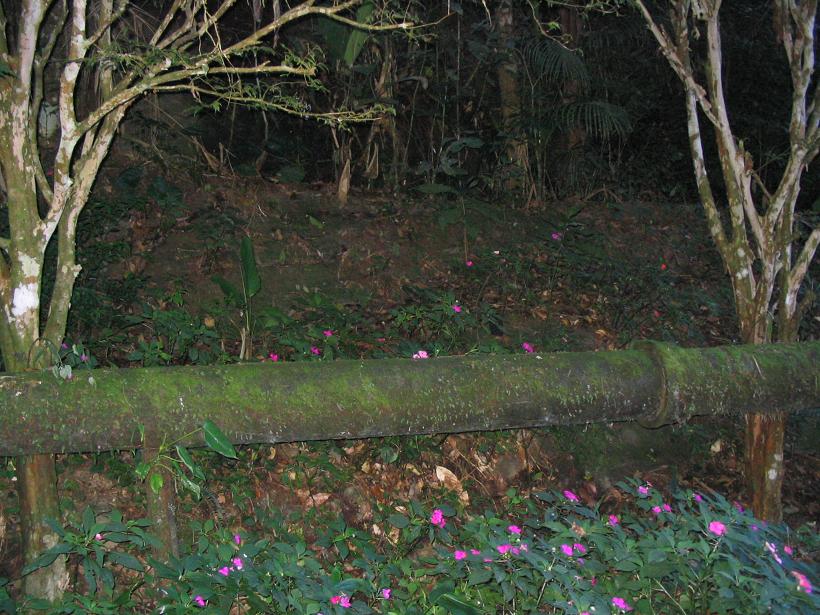
PETP010 And finally, knowing how Mimita loves these images with our brazilian rain forest, please see bellow other example of human use for the water of this parque, and how it is relatively old : this water pipeline has many years, as we can imagine from all this moss covering it. Note bedflower of Marias in foreground [natural growth ; nothing here is cultivated with human hands] and forest in background - be sure there is a river among those trees and darkness of a typical day inside the forest - it could look like a night, but be sure I was walking here in the morning or in the afternoon [at night it would be impossible to be here because you feel totally lost].
PETP011 Below is an old farm, occupied by a family of modest income, in Cachoeiras de Macacu, one of five municipalities where PETP is situated. This farm is in the limits of this park and has a relatively small cultivated area. Note in foreground a gravel road with a work under way: it's for a water pipeline from a neighbooring farm; its owner will pump mineral water to be sold in Rio de Janeiro, where there is a good market for "natural fresh water from the mountains" [and this water is really good, I can say that because I'm a satisfied consumer!]. This view is improved with a nice view from the mountains in background. It was a sunny winter day, time to have pictures because in winter there are fewer rains than in summer, but it wasn't hot then [and at night you feel cold, with almos 10 degrees centigrades, for a carioca this is almost like a night at the North Pole!]. Hope you enjoy.
Largo Da Carioca:
You know, here in Three Americas every place is so distant from others and you need time for a trip, or at least I feel this living in Brazil. There are advantages in a continental country, but you need to walk a lot, LOL ! About that bridge above by the way: there is really a drop, but on summer rainny days the water almost reach the pedestrian level of it, so impressive the power of the water is! And I liked the "straight to jungle" image: the walkway among our trees is almost covered by Brazilian rain forest, so this effect you pointed is common on pictures, and specially at night - this is why we work only with sun light. Well, going ahead with more pictures, see bellow a view from Largo da Carioca - "largo" is a paved square and "carioca" is a person born in Rio de Janeiro, like a "bostonian" or a "québecois" for their respective cities. Historical Covent of Santo Antônio is in this largo [I will send good images of it in next future], and note how pavement received a lovely work of "calceteria", or that art with little stones installed by hand, in nice patterns of design and color, completed with concrete sections. A little open flower market appears at right, and a bus stop [where I take my bus to go from downtown till my parents' apartment] appears too.
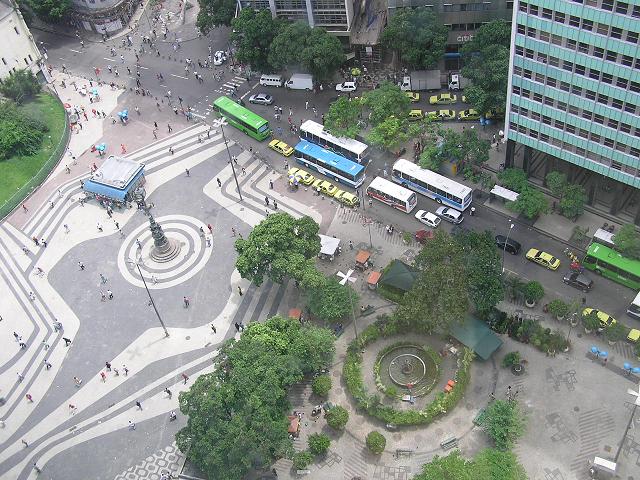
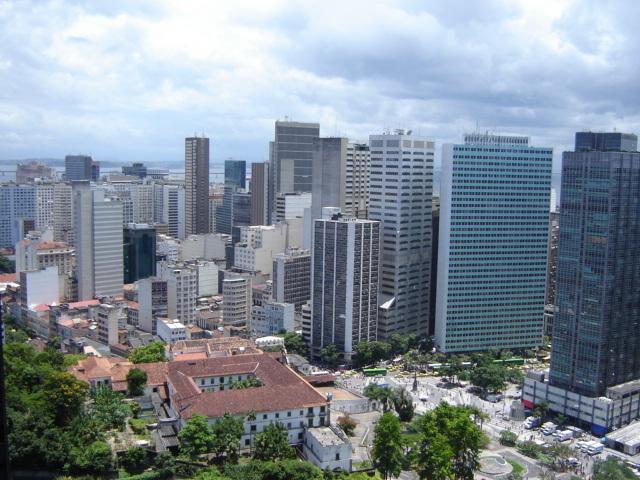
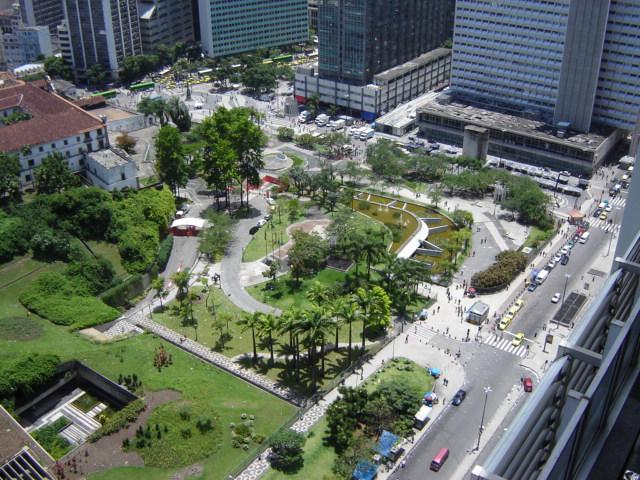
Largo da Carioca and the Covent, now surrounded by skyscrapers [30 to 40 floors] - see the green buses where is the bus stop I commented yesterday. At middle of this largo there is a famous tower clock placed here in 1905
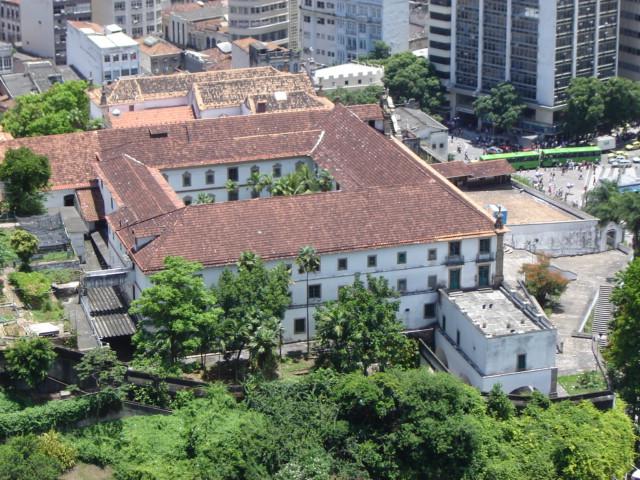
A close-eye view of the lateral facade of this covent - note patios and gardens. It is said that orange trees, brought from Asia to Brazil around XVIIth Century, were planted in these clerical gardens first.
A front view of wonderful Convento de Santo Antônio.
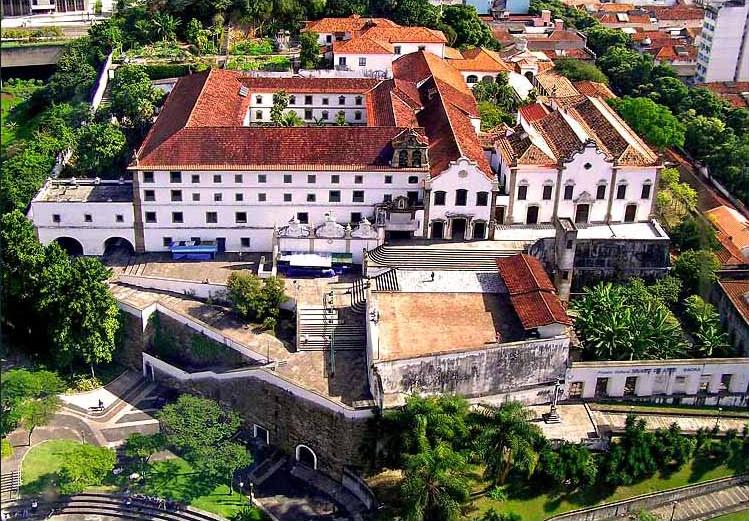
The Covent and modern skyscrapers of Avenida Chile, built where till 1950s there was a small hill [demolished, but preserving the covent and all its gardens]. Gardens surrounding these new towers and the subway station of Carioca were projected by Roberto Burle Marx I hope you could feel a taste of my city.
Gardens by Burle Marx in Rio de Janeiro:
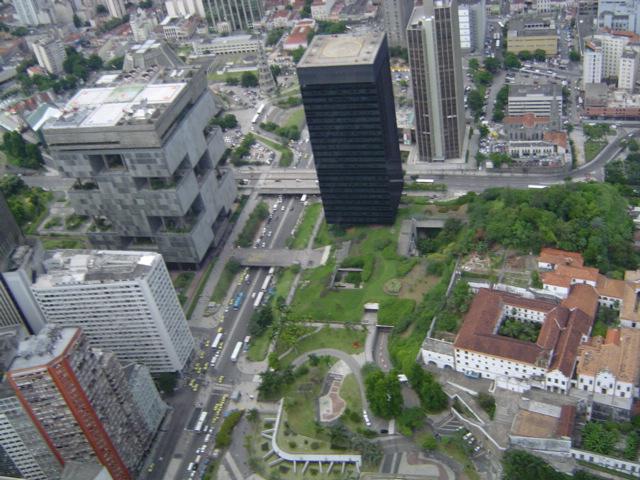
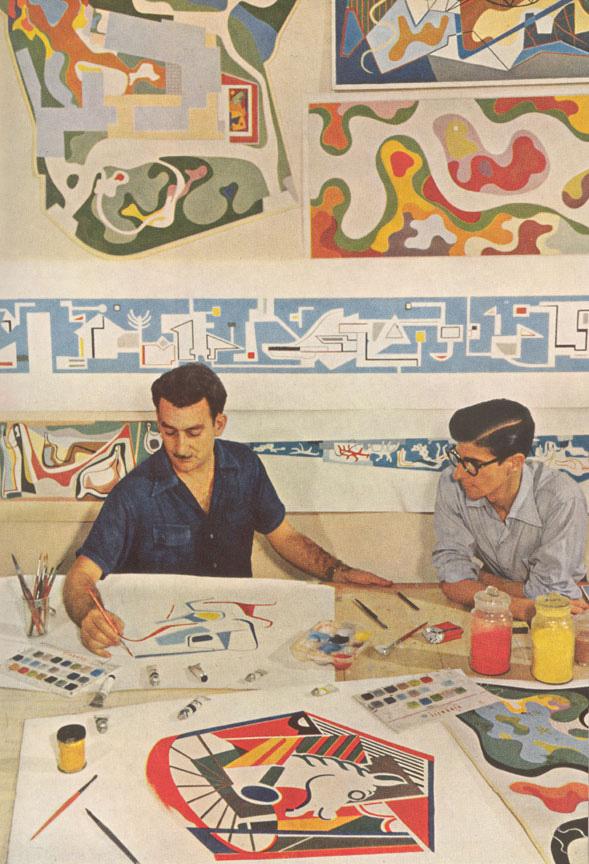
I'm researching my archive of pictures because our beloved Mayor of Freeland asked for more Roberto Burle Marx, a very famous brazilian landscaping architect. There are below a few images with views of Burle Marx's Gardens here in Rio, hope to find more in next future,and as "special gift" I found a portrait of the master at work in his atellier, as presented by The National Geographic Magazine in 1954! Here you see a detailed image of Largo da carioca Subway Station, inaugurated in 1979 with a fabulous rooftop garden created by Roberto Burle Marx. Rooftop is exactly at center of the picture, with a low white line of its concrete wall, and a pool with small fountains and grassy tapestries above it. The gardens spread to the left side of this picture, in direction of Convento de Santo Antônio. Two curiosities: [i] this picture was taken from PETROBRÁS Building [see next picture]; [ii] can you see at right background a buildings with grey-blue colors and horizontal lines with windows ? It is the CEF building, where I gave my classes of post-graduation last year, and will return for more this year [WOW, cash again, let's go shopping!].
A detail with PETROBRÁS Building [at left of the picture], with surface and suspended gardens [note voids with plants in the facade, a very interesting feature because works can stroll when very stressed with office work], everything created by Burle Marx around 1972. This building is the headquarters of Brazilian federal company of petrol exploration and distribution, and maybe you could remember a building created by marciozhugo, a Brazilian bapper, with this building as inspiration for a Freeland Company. At right foreground of the picture you can see Avenida Chile, with calceteria work on their sidewalks [note black and white pattern of the sidewalks]. At foreground and left you see the rooftop of Santa Teresa Streetcar Staion : you already saw images of old neighborhood of Santa Teresa [On Page 1], and here is the place where you can take bondes [those yellow streetcars] - their rails are clearly visible in the picture.

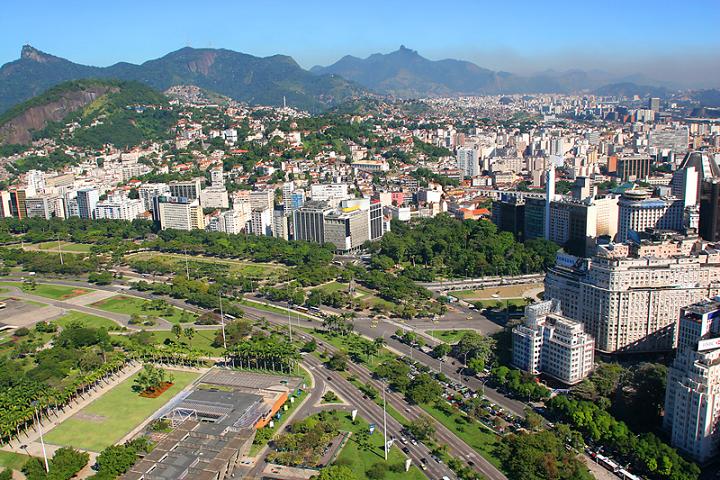
This aerial view shows the southern part of our downtown, exactly where begins the South Zone [beach neighborhoods] of Rio de Janeiro, yet inside Guanabara Bay, with the district of Glória [at left of the picture, middleground] and Santa Teresa [in the hills, at left background]. At left foreground you can see the roof of our Museum of Modern Art [inaugurated in 1967] in the Flamengo Park, with all gardens created by Burle Marx. This park is in a landfill, conquesting from Guanabar Bay more space for this metropolis. A curiosity, partly good, partly bad: at right foreground of the picture you can see North Zone, where my parents and I live, very close to the mountains, at a relatively short distance from Downtown and South Zone, but unfortunely too close enough to feel a taste of their smog [see the creepy brown color of the atmosphere].
And last, but not least, a 1954 portrait of younger Roberto Burle Marx [at left of the picture], surrounded by panels giving a very good idea of his style - I'm sure Fredfree will love this splash of 1950s Brazilian Modernism!
Hoping you enjoyed gazing at the second page!!
Eduarqui